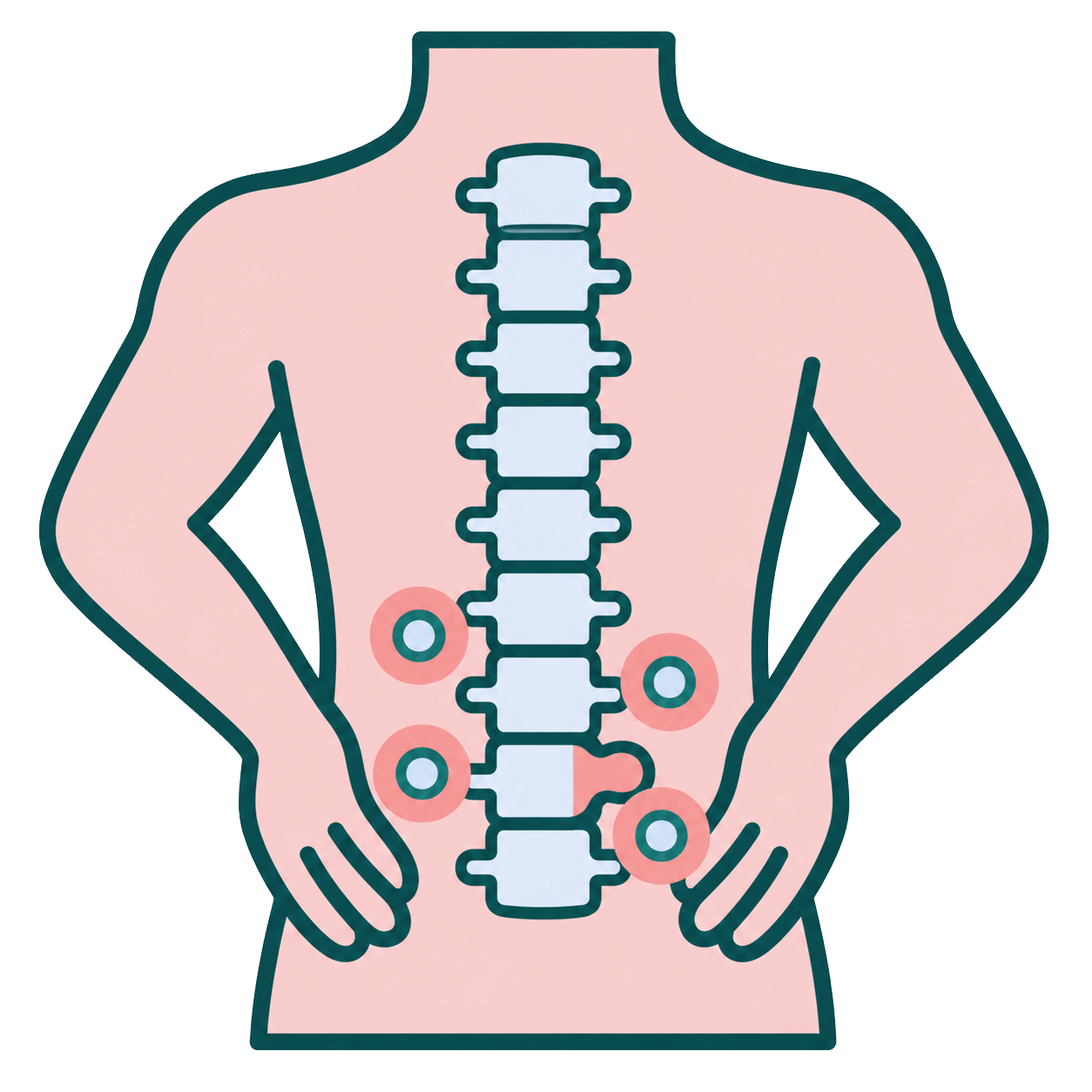
Disc Injury
A bulging or herniated disc may cause back or neck pain, or symptoms in an arm or leg, but some disc changes cause no symptoms. An evaluation is needed to connect symptoms with examination findings and decide which care is appropriate.
TREATMENT FOR DISC INJURY IN YAKIMA
Intervertebral discs sit between the bones of the spine and help absorb load while allowing movement. A herniation occurs when inner disc material extends through the outer layer. Symptoms depend partly on whether nearby nerves are affected.
- Protruding discs result from an asymmetrical or chronically injured disc where the disc center takes on a bulged shape.
- Bulged discs result from an incomplete rupture of the outer disc material, bulging the inner gel outward.
- The worst case scenario, a disc extrusion or herniation, results from a complete rupture of the outer disc material, allowing the inner gel to leak through into the spaces surrounding the disc and vertebrae. This can often separate from the disc as well.
DISC INJURY SIGNS AND SYMPTOMS
Possible symptoms include localized pain or pain, numbness, tingling, or weakness that travels into an arm or leg. These symptoms have several possible causes. New or progressive weakness needs prompt medical assessment.
- Back or neck pain
- Arm or leg symptoms that may include numbness or tingling
- Weakness needs prompt assessment, especially if new or worsening
- Symptoms can have several causes; an examination is needed
- Emergency warning: new bladder or bowel changes or groin numbness requires urgent medical assessment
CHIROPRACTIC CARE FOR DISC INJURY AT ACUTE CHIROPRACTIC
Care may include advice about activity, appropriate exercise, symptom management, or referral. Manual treatment is not suitable for every disc condition and does not push a disc back into place. Discuss benefits, risks, and alternatives after evaluation.
Will I need surgery? Many people are managed without surgery, but serious nerve findings may require urgent specialist care. See Mayo Clinic on herniated discs, sciatica, and back pain.
Medical information: This page is general information, not a diagnosis or individual treatment advice. Care depends on an examination; benefits, risks, alternatives, and results vary.
When should I seek urgent care?
Seek emergency medical care for new loss of bladder or bowel control, numbness around the groin, or severe or worsening weakness. Call 911 for possible stroke symptoms, chest pain, or a serious injury. Do not wait for a routine chiropractic appointment.
Further reading: sciatica symptoms and assessment.